
Across the bustling streets of Manila, university campus cafeterias, and vibrant provincial gatherings, few card games carry greater prestige and tactical excitement than Pusoy Dos (literally translating to "Poker Two"). As the definitive Philippine variation of the international shedding card game known as Big Two, Pusoy Dos blends the card ranking structure of traditional poker with high-stakes shedding mechanics where the primary objective is to be the very first player to empty your hand.
With the expansion of digital gaming platforms, Pusoy Dos has transitioned into online real-money card rooms, allowing four players to compete in real time from anywhere in the country. Unlike passive casino games where players simply watch reels spin, online Pusoy Dos demands sharp tactical awareness, card counting discipline, control of table tempo, and calculated passing maneuvers.
Whether you grew up playing casual matches with friends or are preparing to compete in digital real-money rooms, mastering the nuanced rules of Pusoy Dos is essential. This comprehensive guide covers the official hierarchy of card ranks, valid 5-card poker combinations, table control tactics, passing psychology, scoring formulas, bankroll preservation, and verified cashier procedures.
Technical Specifications and Table Overview
Before joining a real-money Pusoy Dos table, reviewing the core operational parameters provides a clear framework for how digital card rooms operate:
| Dimension | Standard Specification | Strategic Impact on Gameplay |
|---|---|---|
| Number of Players | Exactly 4 Players per Table | Creates intense four-way competition where hand control shifts rapidly |
| Deck Composition | Standard 52-Card Deck (No Jokers) | All 52 cards are dealt out equally (13 cards per player) |
| Highest Card | 2 of Diamonds (or 2 of Spades by house rule) | The number 2 is the most powerful card in the game |
| Lowest Card | 3 of Clubs (or 3 of Spades by house rule) | The holder of the lowest 3 leads the very first trick |
| Core Objective | Shed all 13 cards before opponents | Win the pot and collect point penalties from remaining players |
| Suit Hierarchy | Diamonds > Hearts > Spades > Clubs | Breaks ties when identical card ranks are contested |
| Turn Time Limit | 15 to 20 Seconds per Turn | Enforces rapid analytical thinking and prevents table stalling |
| Betting Limits | PHP 1.00 / point to PHP 50.00+ / point | Accommodates casual recreational players and competitive card sharks |
The Card Ranking Hierarchy: The Power of the Deuce
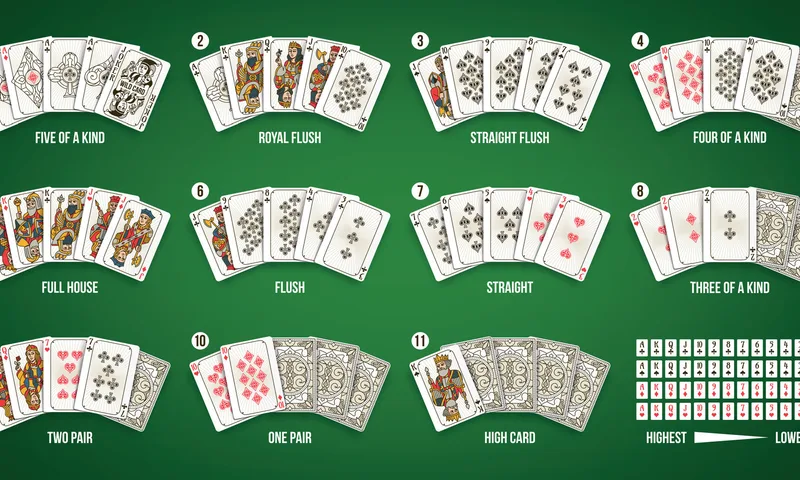
The most critical fundamental concept that distinguishes Pusoy Dos from Western poker is the unique inverted card ranking hierarchy:
Card Rank Hierarchy (From Highest to Lowest):
$$\mathbf{2} \text{ (Highest)} > \mathbf{A} > \mathbf{K} > \mathbf{Q} > \mathbf{J} > \mathbf{10} > \mathbf{9} > \mathbf{8} > \mathbf{7} > \mathbf{6} > \mathbf{5} > \mathbf{4} > \mathbf{3} \text{ (Lowest)}$$
- In Pusoy Dos, the number 2 (the "Dos") is the absolute highest rank, dominating all Aces and face cards.
- The number 3 is the lowest rank in the entire deck.
- An Ace is powerful, but it will be beaten immediately by any 2.
Suit Ranking Hierarchy (From Highest to Lowest):
When two players play a single card of the identical numerical rank, the tie is broken by the suit:
$$\mathbf{\text{Diamonds } (\diamondsuit)} > \mathbf{\text{Hearts } (\heartsuit)} > \mathbf{\text{Spades } (\spadesuit)} > \mathbf{\text{Clubs } (\clubsuit)}$$
(Note: Traditional Philippine street rules occasionally rank Spades above Diamonds; however, the overwhelming majority of certified digital card rooms enforce the international standard of Diamonds as the supreme suit, followed by Hearts, Spades, and Clubs).
Under standard rules:
- The 2 of Diamonds is the single most powerful individual card in the game, unbeatable by any other single card.
- The 3 of Clubs is the lowest card in the deck and determines who leads the initial trick of the game.
Hand Play Formats: Singles, Pairs, Triples and 5-Card Hands
In Pusoy Dos, players can shed cards in four valid play structures. Whatever structure the lead player plays, all subsequent players must follow with the exact same structure, but with higher-ranking cards:
[Lead Plays a Single] ──> [Opponents Must Play a Higher Single or Pass]
[Lead Plays a Pair]   ──> [Opponents Must Play a Higher Pair or Pass]
[Lead Plays a 5-Card] ──> [Opponents Must Play a Higher 5-Card or Pass]
1. Singles
A play consisting of one individual card. A single card can only be beaten by a higher single card (e.g., an 8 of Hearts beats an 8 of Clubs; a 2 of Spades beats an Ace of Diamonds).
2. Pairs
A play consisting of two cards of identical rank (e.g., two 7s, two Queens, or two 2s). A pair is beaten by a higher-ranking pair. If two pairs share the same numerical rank, the pair containing the higher suit wins (e.g., a pair of Kings containing the King of Diamonds beats a pair of Kings containing only Clubs and Spades).
3. Triples (Three of a Kind)
A play consisting of three cards of identical numerical rank (e.g., 9♠ - 9♦ - 9♥). Triples are beaten strictly by higher-ranking triples (e.g., three Jacks beat three 9s).
4. Five-Card Poker Hands
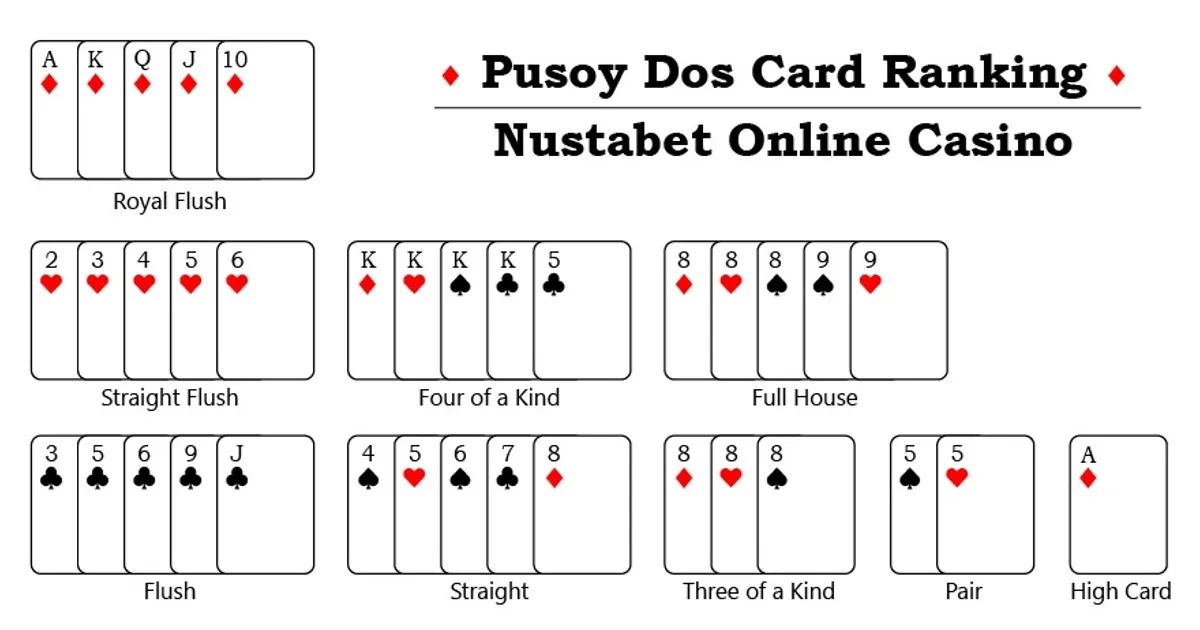
A play consisting of five cards arranged in recognized poker combinations. Five-card hands are governed by their own internal hierarchy. A lower-category five-card hand can be beaten by a higher-category hand, or by a higher-ranking hand within the same category:
| 5-Card Hand Category | Hand Description | Beating Condition |
|---|---|---|
| Straight (Escalera) | Five consecutive ranks of mixed suits | Beaten by a higher straight or any higher category hand |
| Flush | Five cards of the identical suit | Beaten by a higher-suit flush or any higher category hand |
| Full House (Casa) | Three of a kind plus a matching pair | Determined by the rank of the three of a kind |
| Four of a Kind + Kicker | Four identical cards plus any single card | Beaten only by a higher 4-of-a-kind or a Straight Flush |
| Straight Flush | Five consecutive cards of the same suit | Highest possible standard hand category in the game |
| Royal Flush | 10 - J - Q - K - A of the identical suit | Unbeatable supreme five-card combination |
Table Flow and the Power of the "Pass"
Understanding the flow of tricks and the strategic power of passing is essential for controlling the game:
Starting the Round
At the start of the match, all 52 cards are dealt out equally (13 cards per player). The player holding the 3 of Clubs must lead the very first trick and is legally required to include that 3 of Clubs in their opening play (as a single, part of a pair, a triple, or a 5-card straight).
Rotation and Passing
Play proceeds clockwise around the table. Each subsequent player must either:
- Play a higher-ranking combination of the exact same format (e.g., playing a higher single against a single).
- Pass their turn if they cannot beat the current cards, or choose to withhold their high cards for strategic reasons.
Regaining Table Control
If a player plays a combination that no other player can beat—meaning all three opposing players consecutively choose to Pass—the trick ends.
- The played cards are swept into the discard pile.
- The player who played the highest unbeatable combination regains Control of the Table.
- That player now has the absolute freedom to lead the next trick with any valid combination they desire (a single, a pair, a triple, or a 5-card hand).
Gaining table control is the ultimate tactical objective in Pusoy Dos, because it allows you to lead with your multi-card combinations and shed large numbers of cards at once while opponents are helpless to respond.
Tactical Table Strategies for Pusoy Dos
Succeeding in real-money Pusoy Dos requires strategic foresight rather than purely aggressive card shedding:
Preserving Control Cards (The Deuces)
Your 2s are your most valuable tactical assets. Beginners often make the error of burning their 2s early in the match to win small single-card tricks.
- The Strategic Rule: Save your 2s until the mid-to-late game when you can use them to seize table control at a critical moment.
- Winning a trick with a 2 of Diamonds allows you to immediately lead a 5-card Full House or a large pair, shedding multiple cards in one stroke and putting opponents under severe pressure.
Managing Deadwood and Low Singles
Single cards of low ranks (such as unmatched 3s, 4s, 5s, and 6s) are the most difficult cards to shed in Pusoy Dos. Whenever you gain table control, consider whether you should lead your five-card hands first to reduce your overall card count, or shed your low garbage singles early while opponents are still holding diverse hands.
The Art of the Strategic Pass
You are never legally forced to beat a card simply because you hold a higher card in your hand. Passing strategically can be far more profitable than playing:
- If Player A leads a King, and Player B plays an Ace, you may choose to Pass even if you hold a 2.
- Passing forces Player B to lead the next trick, preserving your 2 to capture control later when the stakes are higher.
Scoring, Penalties and Bankroll Management
Digital Pusoy Dos card rooms operate on point-multiplier stakes:
$$\text{Player Loss} = \text{Remaining Cards in Hand} \times \text{Table Point Value}$$
The Double and Triple Penalty (Bagsik):
To penalize poor play and reward rapid victories, standard rules enforce escalating multipliers on players caught holding large hands when a winner emerges:
- Holding 1 to 9 Cards: Pay standard 1x penalty per card.
- Holding 10 to 12 Cards (Double Penalty): Pay 2x points per card.
- Holding all 13 Cards (Triple Penalty / "Puyat"): If an opponent sheds all 13 cards before you have played a single card, you pay a devastating 3x penalty on all 13 cards (equivalent to 39 points).
Bankroll Management Guidelines:
- The 100-Point Reserve: Ensure your active bankroll equals at least 100 times the table point value. If a table charges PHP 2.00 per point, bring at least PHP 200 to absorb occasional double-penalty rounds.
- Instant Cashier Payouts: Authorized platforms support rapid cashouts through local e-wallets like GCash and Maya. Payout requests for cleared card winnings are dispatched within 15 to 45 minutes, operating under regulatory guidelines monitored by PAGCOR and the Bangko Sentral ng Pilipinas.
Responsible Gaming Commitment
Pusoy Dos is an intellectually demanding, culturally rich game of skill. However, real-money wagering must always be approached with strict spending discipline. Treat card stakes strictly as an entertainment expense, never as an income source. If you or someone you know requires assistance with managing gambling habits, free and confidential counseling is available through Gamblers Anonymous and Gambling Therapy.
Frequently Asked Questions
Which card is the absolute highest in standard Pusoy Dos?
Under standard Philippine digital rules, the 2 of Diamonds is the highest single card in the deck, beating all other 2s, Aces, and face cards.
What is the lowest card in Pusoy Dos, and what is its role?
The 3 of Clubs is the lowest card in the deck. The player dealt the 3 of Clubs must lead the very first trick of the match and must include that card in their opening play.
Can a Full House beat a Straight in Pusoy Dos?
Yes. Five-card hands follow standard poker rankings: a Full House beats any Straight and any Flush, but is beaten by Four of a Kind and Straight Flushes.
What happens if I end the game with all 13 cards still in my hand?
If an opponent sheds all cards before you play a single card, you suffer a "Triple Penalty" (often called Puyat or Sunog), paying three times the standard point value on all 13 cards.
Can I play online Pusoy Dos on my smartphone?
Yes. Modern online gaming platforms provide lightweight mobile web and app interfaces where you can join 4-player real-money Pusoy Dos tables directly on Android and iOS devices.
Related Guides & Silo Navigation
- Return to Pinoy Traditional Games Hub — Complete guide to local card and carnival games.
- Online Tongits Real-Money Guide — Master card melds, challenges, and Sapaw rules.
- Digital Perya Color Game Guide — Explore 3-dice probability and odds.
- MILYON88 GCash Deposit Tutorial — How to fund your balance via mobile QR.
- Fast Withdrawal and KYC Guide — Complete cashout requirements.